
Parallel Seas
A sensitive cartography of an inner journey between the Mediterranean and the Adriatic towards a renewed marine consciousness.
Written by Yasmine Dayan.
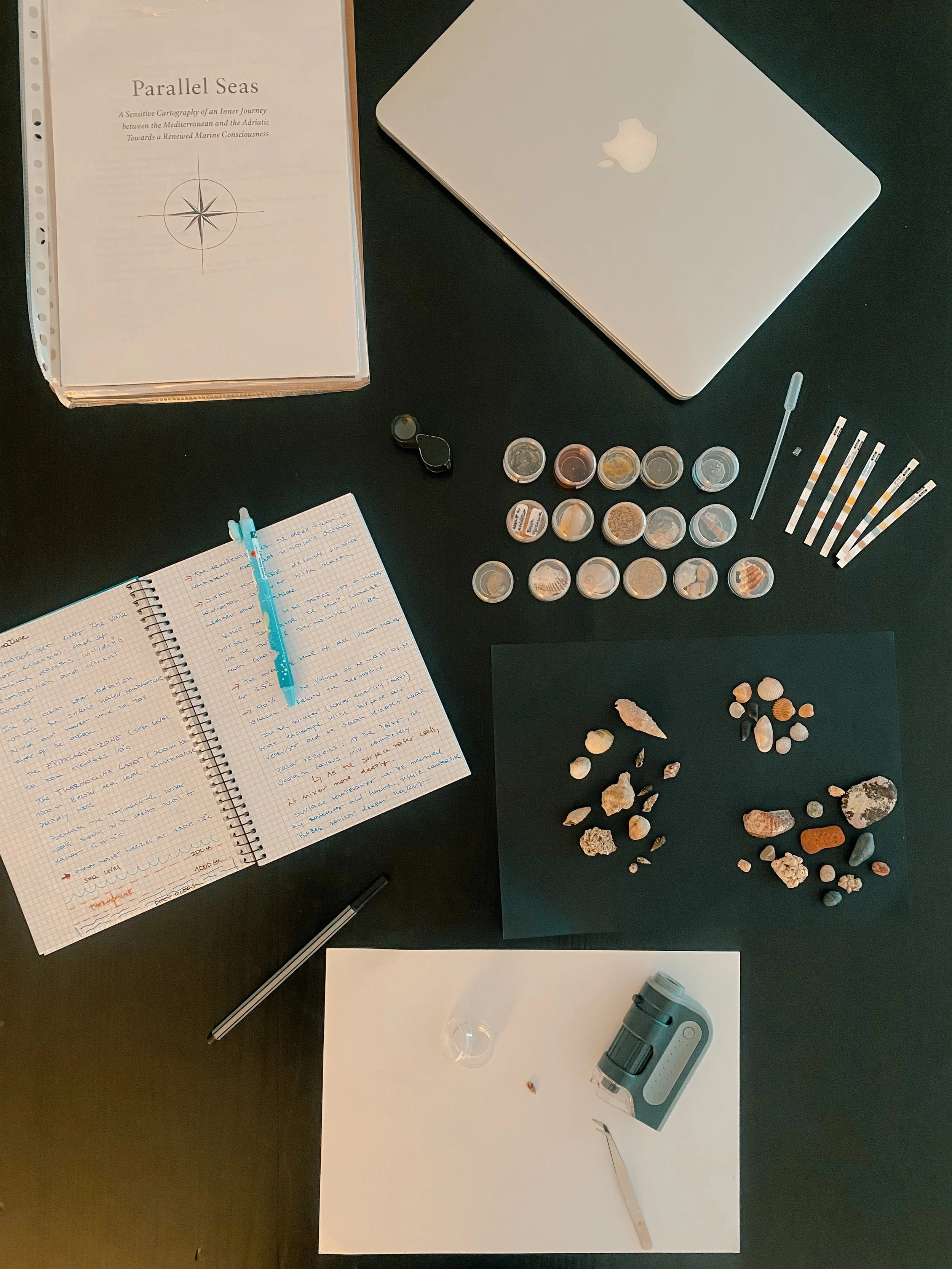
Parallel Seas project was born quietly, from my own longing to connect with the sea in a way that went beyond swimming in its waves or admiring its surface. It was never an assignment or commission. I wanted to listen. I wanted to let the ocean speak in its own language of textures, colors, organisms, and currents.
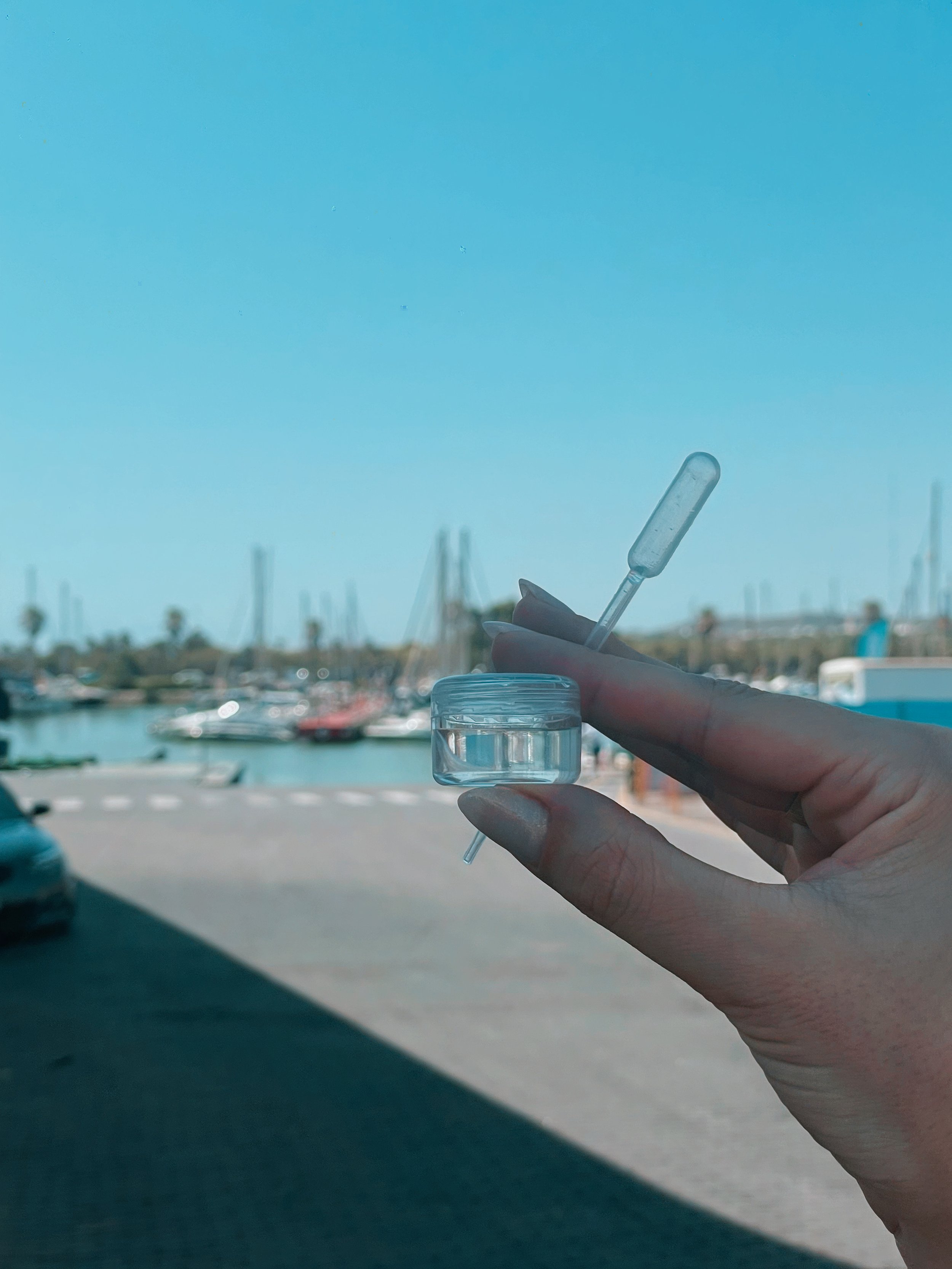
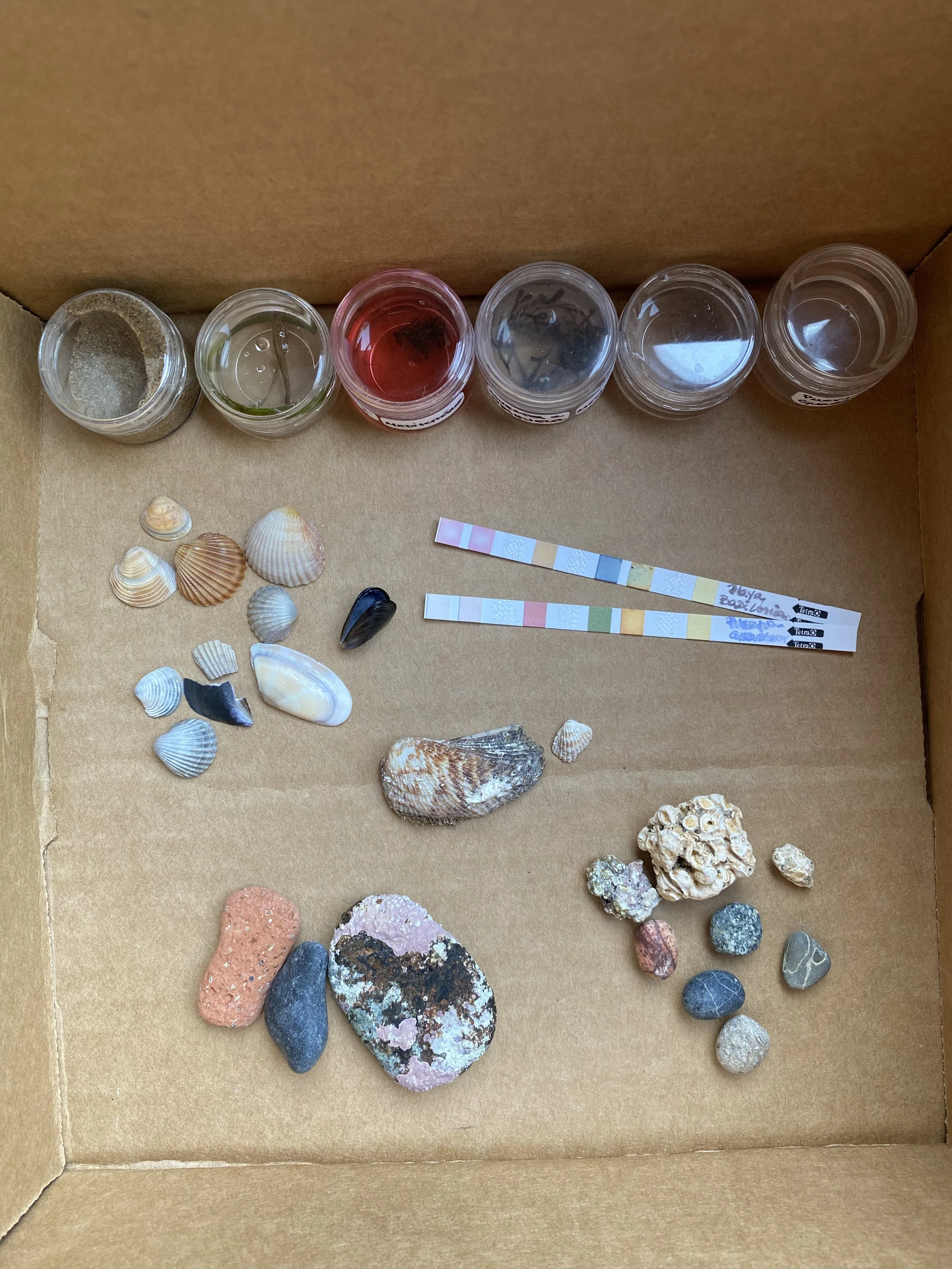
During the summer of 2025, I carried a small field kit with me: a portable microscope, glass vials, slides, and strips to test water parameters. With them, I collected samples of marine life and delicate remains of matter along two coasts: some Mediterranean shores of Spain and an Adriatic beach in Italy. What emerged from these weeks of observation was not only scientific data, but a diary: a record of encounters where biology, poetry, and memory became indistinguishable.
The Mediterranean Stories
The journey began in Guardamar del Segura, a coastal town in Spain where salt wind moves through dunes and fishermen’s boats. There, I first experimented with both biological sampling and seawater analysis. Algae, shells, and tiny fragments collected from the shoreline revealed themselves under the portable microscope, while strips testing the chemistry of the water spoke of nitrates, hardness, and balance. Together, they told a story of a coast shaped by human presence yet still capable of sustaining its natural rhythm.
From Guardamar, I crossed by boat to Tabarca, the only inhabited island of the Valencian Community and Spain’s first marine reserve. Snorkeling for hours in its crystalline waters, I entered a living tapestry of biodiversity: shoals of fish swimming without fear, meadows of seagrass carpeting the seabed, sea urchins tucked into crevices, and even an octopus guarding its home. Each encounter, whether large or small, became part of a shared revelation that this island holds within it: not one story, but a multitude of voices. To collect here was to receive a symbol of that richness, infinitely significant when observed closely.
The Mar Menor, where my sister contributed her own set of collected samples, brought another layer of meaning. To receive her specimens felt like receiving letters written by the sea, carried by someone I love. It showed me that Parallel Seas was not only about my gaze, but about shared perception; a reminder that caring for the sea is a collective act.
The Adriatic Secrets
Giulianova, my partner’s hometown on the Adriatic coast of Italy, holds a special intimacy for me. It is a place of return, family, and belonging. There, the project continued with the same devotion: gathering algae, shells, and measuring water both near the shore and in open sea.
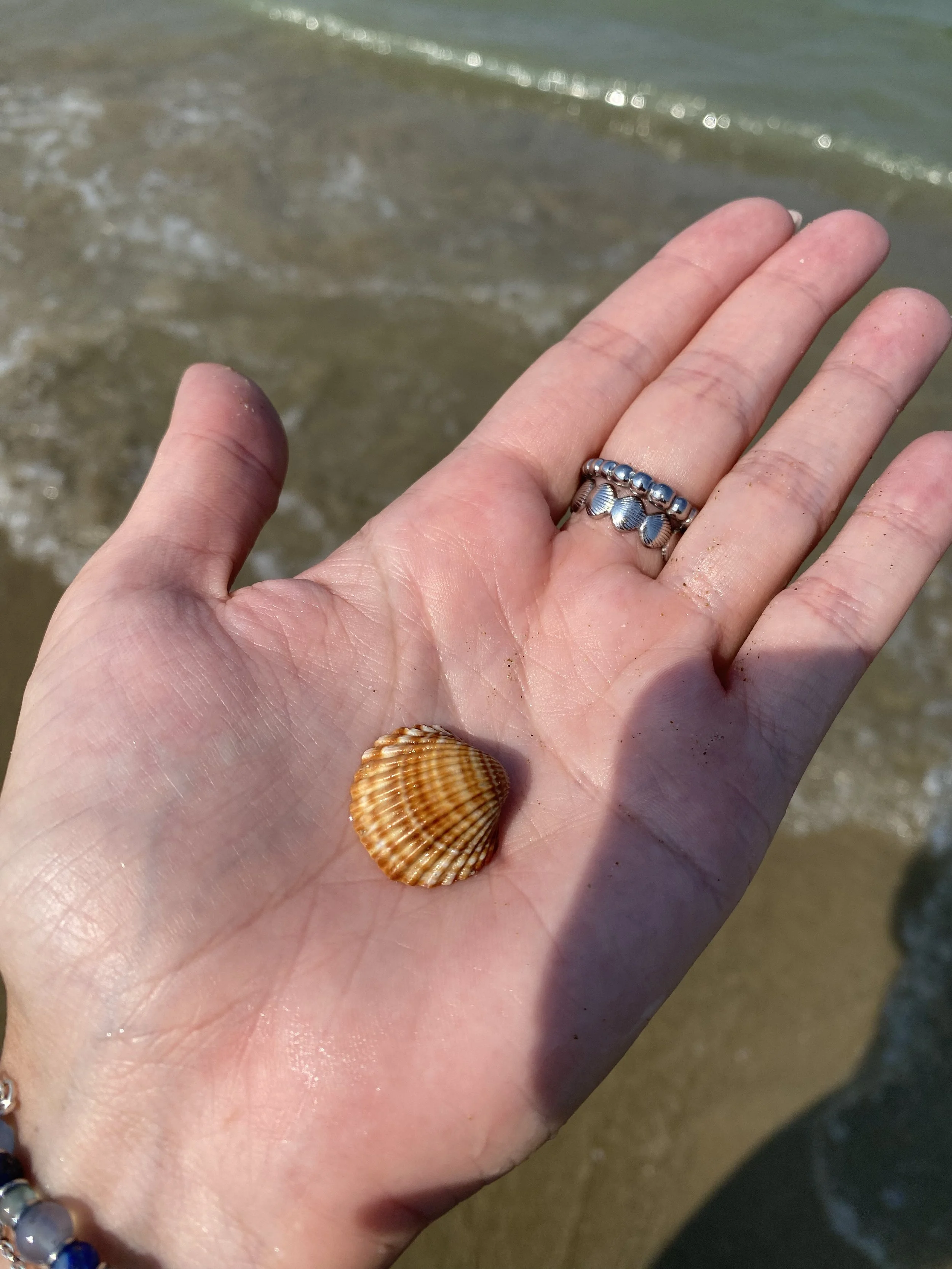
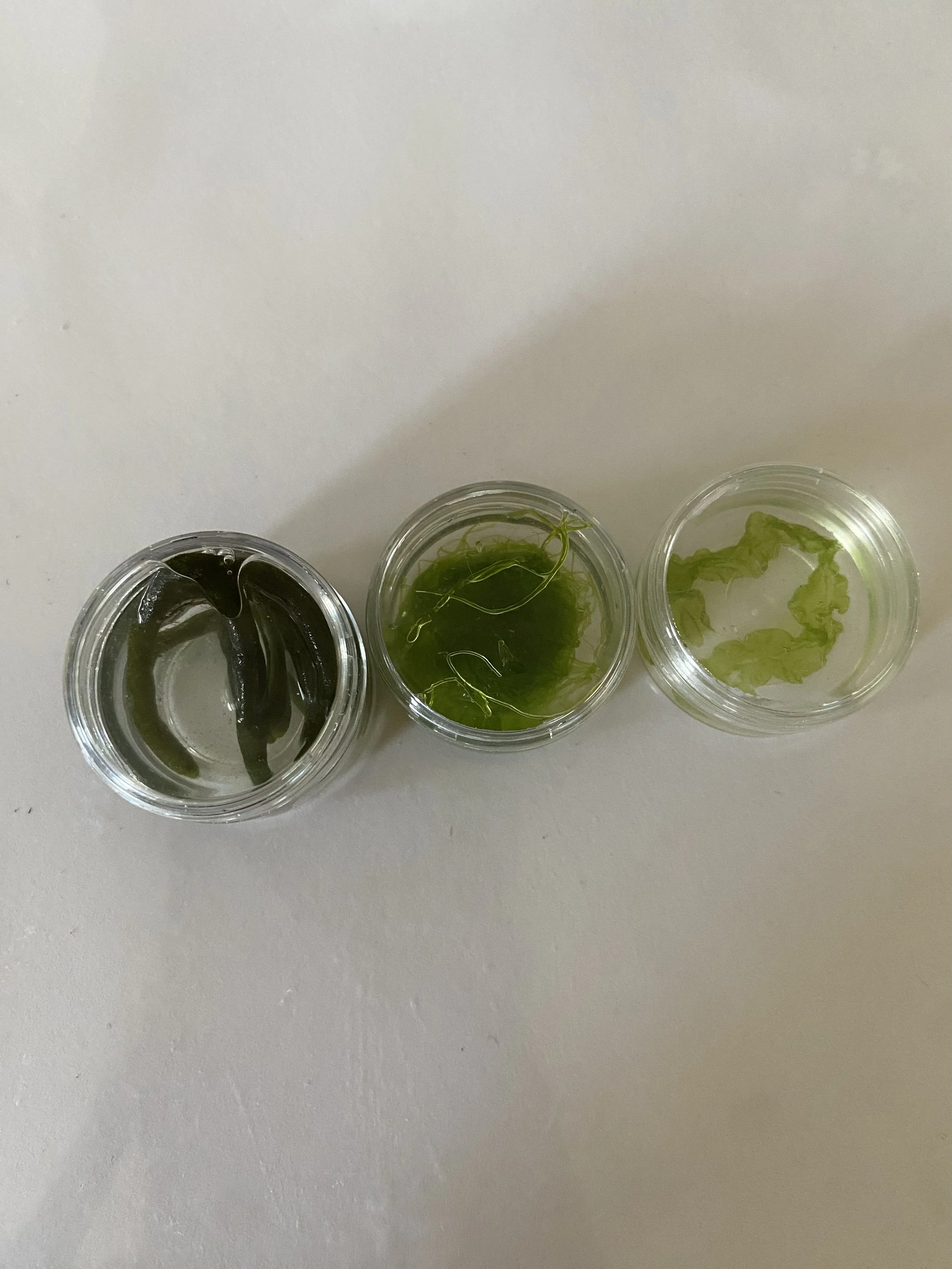
Each specimen became a doorway into a hidden narrative. A translucent green alga, like a ribbon unspooled from the depths. A delicate snail shell, familiar yet eternal, reminding me of continuity across years of visiting this coast. A fragment of algae resembling coral or anemone, carried by the sea like a secret offering. Even the chemistry of the water told a story: minerals steady, alkalinity serene, nutrients present but measured, as if the sea itself maintained its equilibrium against human presence.
If the Mediterranean taught me about abundance and strength, the Adriatic spoke of intimacy and remembrance. It reminded me that listening to the sea is not only an act of scientific observation but also of personal belonging: to a place, to people, to the continuity of visits and returns.
Science, Poetry, and Responsibility
Through microscopes, every sample revealed more than I expected: the fine striations of shells, the delicate lamellae of calcite, the fibers of algae carrying sediments like small universes. Yet each observation carried not only technical details but also poetic weight. To see was to feel, to describe was to honor.
In an age of climate change, overfishing, and pollution, projects like Parallel Seas may appear modest. What is a single person with a microscope compared to the scale of planetary crisis? And yet, I believe that attention itself is a form of resistance. To kneel by the shore and record the water’s chemistry, to notice a shell or a drifting alga, is to affirm that these lives and processes matter.
Marine consciousness begins not only with policy or laboratories but also with intimacy: the recognition that every wave carries reminiscence, and that we are part of that thought. When we listen closely, the sea does not speak in abstractions but in concrete presences: an octopus hiding in rocks, a gastropod polished by ripples, a nitrate level rising in harbor waters. These details are not small; they are everything.
A Closing Tide
By the time the summer trip ended, I had gathered dozens of specimens, images, and water measurements. But what I truly collected was gratitude. Gratitude for the Mediterranean and the Adriatic, for the families and friends who walked beside me, for the simple act of observing. Gratitude for the ocean itself, whose patience and resilience continue to astonish me.
Parallel Seas is not finished; in truth, it will never be. It is less a project than a way of seeing, an invitation to approach the sea with care, humility, and openness. I wrote it for myself, as a way of deepening my connection, but I share it now in the hope that it may inspire others to pause, to notice, and to observe.
This project taught me that documenting the sea is not only about science, nor only about poetry. It is about presence. To let the ocean speak in numbers, textures, and colors, and to allow those expressions to transform into responsibility. In times of crisis and biodiversity loss, Parallel Seas is my reminder that the ocean’s future depends on our collective capacity to take notice and to act.
Because in the end, the sea is not only water. It is evocation, tenacity, and truth. And if we dare to listen, it will tell us everything.
“This piece is part of a wider personal project, Parallel Seas, a diary of the Mediterranean and Adriatic written through science, awareness, and poetry.”
With tides of gratitude, from the deepest waters of my heart, thank you.
Yours in oceans and memory,
Yasmin.
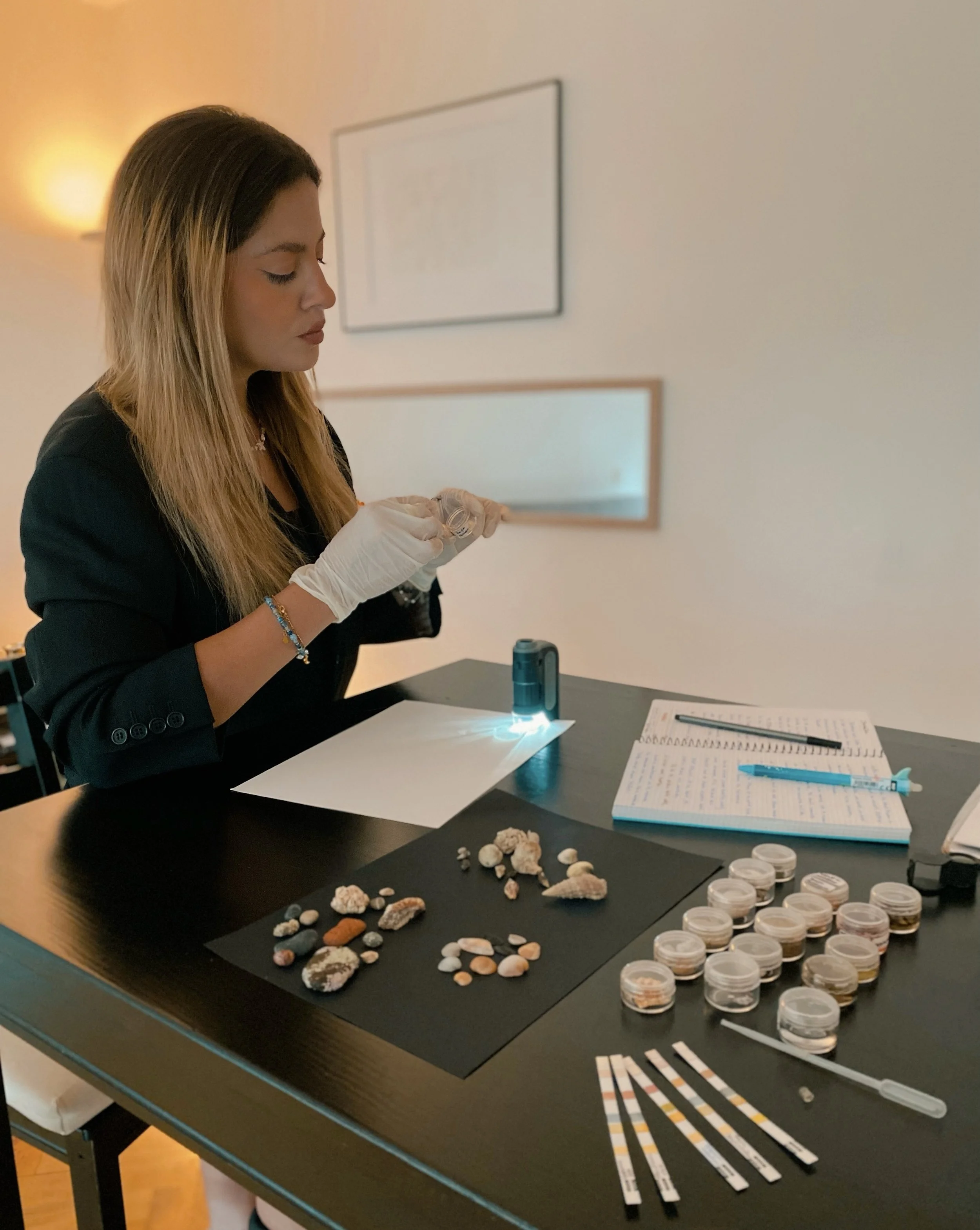
Yasmine Dayan
Yasmine Dayan is a communications professional for luxury brands from Buenos Aires, Argentina, now based in Madrid, and a beginner in the marine science field. She is currently pursuing online Marine Biology studies accredited by the American Museum of Natural History of New York. Though her professional background comes from a different sector, a universe of elegance and storytelling, she has long been a passionate, self-taught ocean enthusiast. In Parallel Seas, she combined science and poetry through hands-on exploration: collecting algae, shells, and fragments, and recording water parameters with a portable microscope and test strips. Driven by curiosity and a profound love for the sea, she is committed to deepening her knowledge through projects, courses, and further studies, with the aim of contributing to marine biology while reminding others of the resilience, fragility, and urgency of caring for the ocean.