
The Dead Do Tell Tales: Lessons from Marine Mammal Strandings
Written by Rachel Lennon
I stood with my hand gripping the edge of a metal table, legs swaying slightly, staring down at a fat juvenile harbour porpoise. In front of the porpoise was my supervisor, explaining in detail how the thawing process compromises the cellular structure of a frozen carcass. Behind him, a cow was hanging by its legs from the ceiling as a group of veterinary medicine students pulled out its intestines to understand its internal anatomy, essential insights for these future vets. A post-mortem room technician brushed past me. “Excuse me, love,” she said, carrying a bucket full of frozen squirrels destined for necropsy. Not long after that, I fainted. It was my first day as a PhD researcher with the Scottish Marine Animal Stranding Scheme (SMASS).
It was quite the introduction to veterinary pathology for an (almost) complete novice. But since then, I’ve thrown myself in headfirst to learning what the dead can tell us about the living.
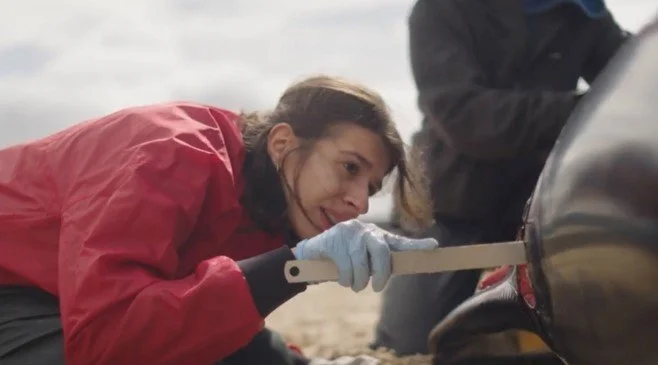
I’ve assisted on many cetacean (whales, dolphins, and porpoises) post-mortems since that first day, observing experts at work and witnessing first-hand the immense value of these examinations. Watching skilled pathologists interpret subtle clues, such as tissue colour, parasite presence, or even stomach contents, feels like seeing a detective story unfold in real time. Each post-mortem helps reveal how these remarkable animals lived and what pressures they faced in the wild, offering vital insights into conservation and ocean health.
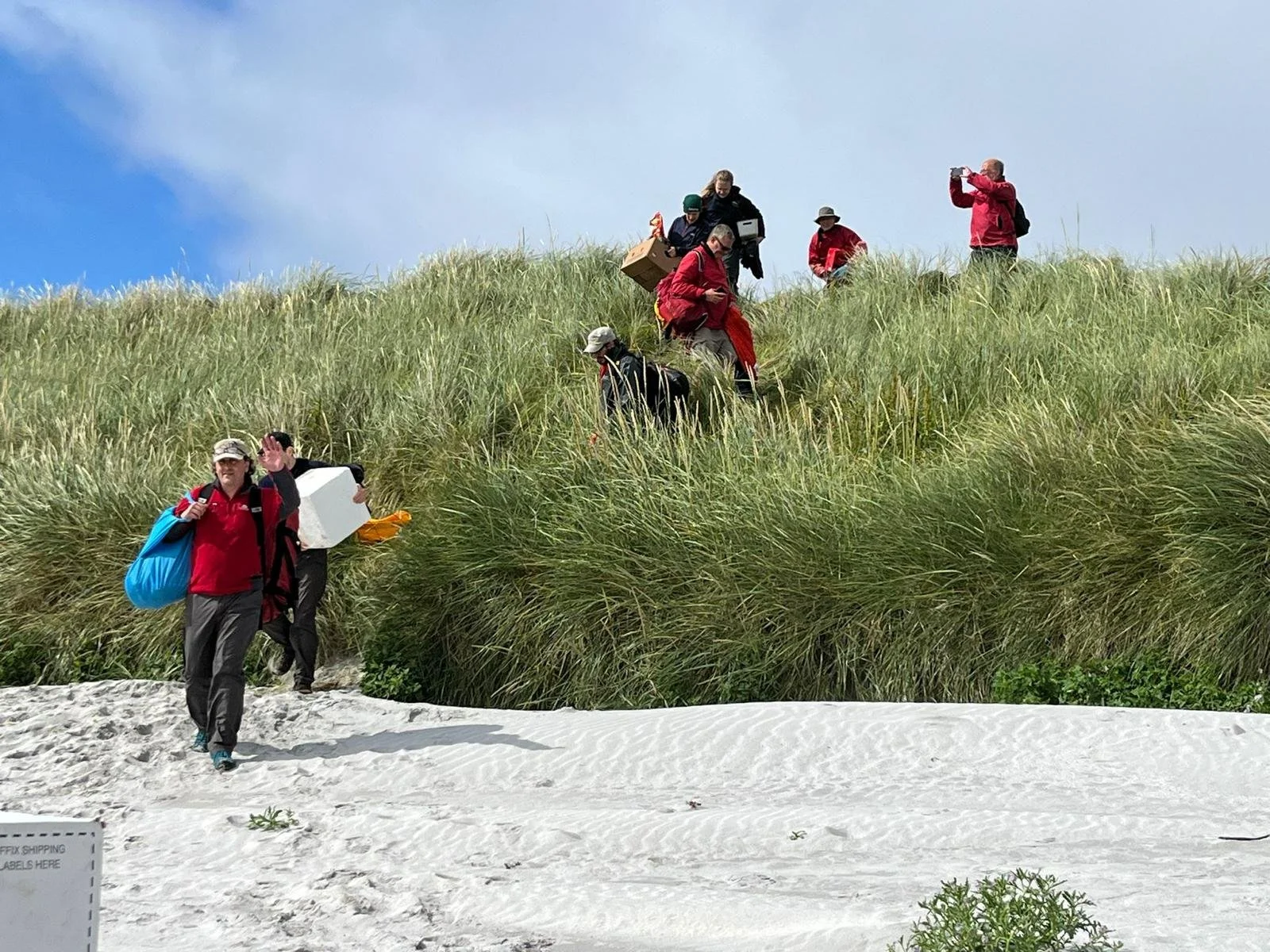
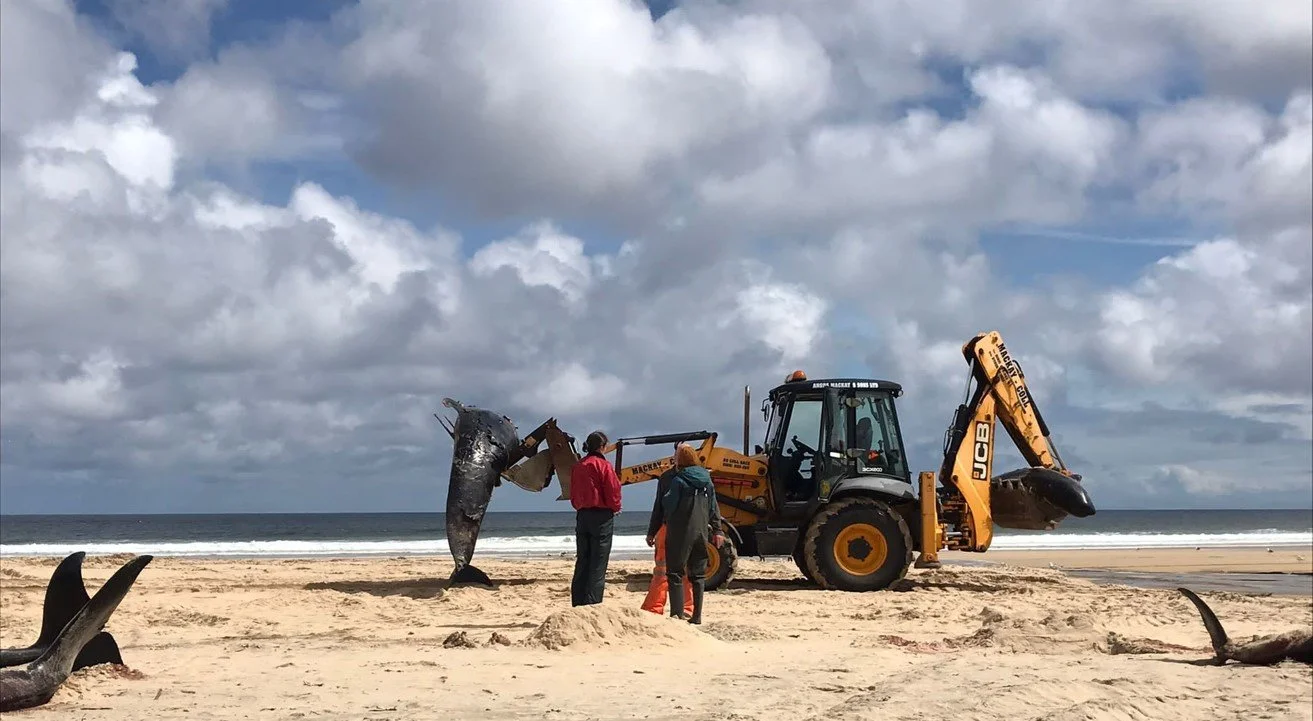
Never was this more evident to me than during the mass stranding event on 11th July in Orkney. On the remote island of Sanday, 77 long-finned pilot whales had stranded, and five parallel teams of experts worked tirelessly to examine every single one of them.
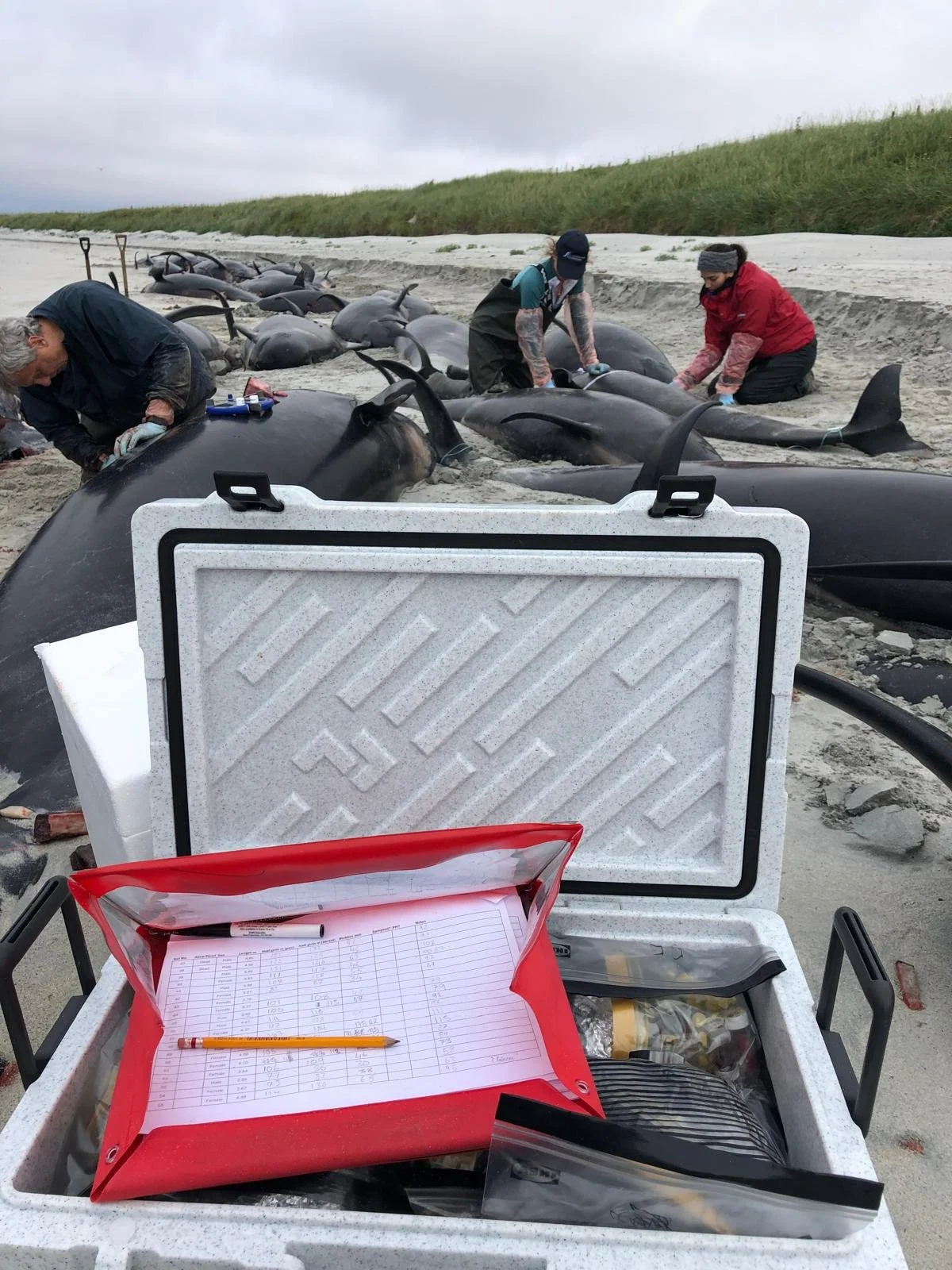
I was part of one of those teams, led by a veterinary pathologist who examined ten animals. Each was treated with the same meticulous attention to detail, care, and scientific rigour. It’s important to stress that these are not small animals, a pilot whale can reach over seven metres in length and weigh up to 4500 kilograms, making the work extremely physically exhausting. Yet the mental effort required to carefully examine case after case is just as intense. After completing the final necropsy, the vet looked up and said, “I don’t think I can do any more.” Yet when we looked around, we realised the other four teams had done the same as us. All 77 animals had been examined. More than 2,000 biological samples had been collected, pages of detailed notes filled, and hundreds of high-resolution images captured. It was an extraordinary collective effort. These data will not only help understand why this mass stranding may have occurred but also deepen our understanding of long-finned pilot whale ecology, genetics, behaviour, and health, crucial knowledge for better protecting the species in the future.
In the marine world, even basic information like sex or age is hard to obtain from live animals. The ocean is vast and largely inaccessible, and many marine mammals are elusive by nature. Strandings offer a rare opportunity to access this information, and post-mortems offer an even deeper dive into health, diet, pollutant exposure, past trauma, reproductive history, family connections, and more.
My own research explores what we can learn from these individual cases at a population level. I’ve analysed hundreds of SMASS’ post-mortem reports spanning the past 15 years to identify trends in the health of stranded harbour porpoises. Our findings suggest that many of these animals have underlying health issues that may reduce their ability to cope with additional pressures (Lennon et al., 2025). As the oceans grow noisier, more polluted, and increasingly busy, animals in robust health may adapt, but those already struggling with compromised respiratory systems or heavy parasite burdens are far less resilient. Understanding these impacts is essential if we want to find ways to reduce them.
To answer these questions, we need good data, and that starts with good people collecting it. Fortunately for marine mammals everywhere, the stranding community has them in abundance. I once had a volunteer drive three hours on a Friday night to drop off a porpoise at the University of Glasgow’s post-mortem rooms, saying it was “the least they could do,” and asking only that we share our findings. When we attended the mass stranding in Orkney, people gave up space in their homes so we could have somewhere to sleep and shower at the end of each day.
There are hundreds of examples of this kind of dedication, showing how much people care about these animals. Historically, the systematic hunting of whales once inspired the global “Save the Whale” movement of the 1970s, which led to the international moratorium on whaling.
I’m constantly inspired by the generosity, dedication, and expertise of those involved. From the scientists conducting post-mortems, to the volunteers who give their time (and homes!), to the artists who create emotional responses that reach beyond the scientific narrative (Sam Gare, n.d.), each plays an essential role in making the most of these events and together, they ensure that even in death, these animals can tell us something vital that can help protect the living animals that remain.
References:
Lennon, R.L.; Storm, J.; Koger, R.; Thompson, E.; Williams, R.S.; Dagleish, M.P.; Babayan, S.A.; Ten Doeschate, M.T.I.; Davison, N.J.; Brownlow, A.C. The Dead Do Tell Tales: Using Pathology Data From Cetacean Necropsy Reports to Gain Insights Into Animal Health. Ecol. Evol. 2025, 15, e72119.
Sam Gare. (n.d.). Keening – Song of the Stranding. [online] Available at: https://www.northharrisstudio.co.uk/keening.
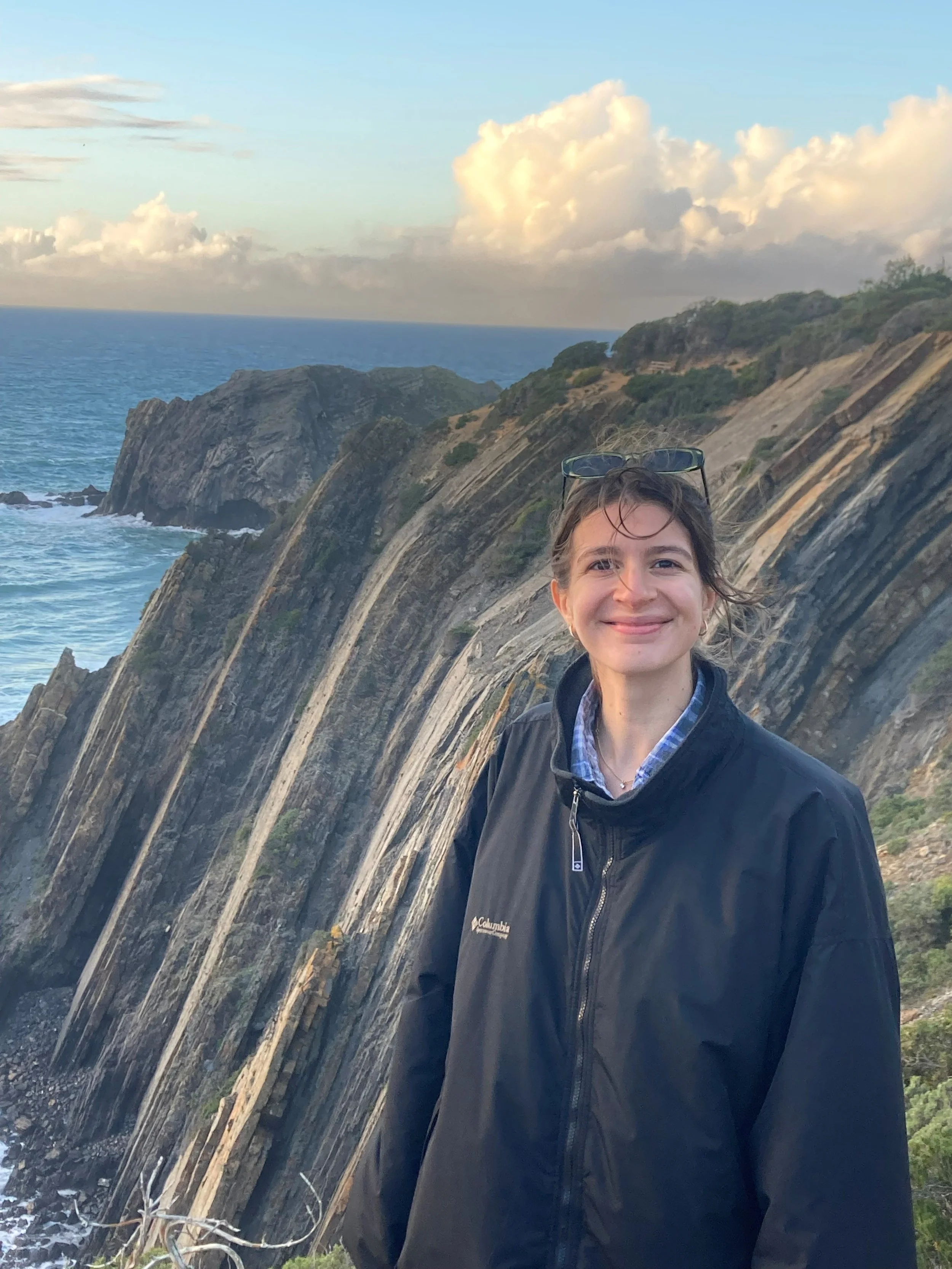
Rachel Lennon
I am a PhD researcher with the Scottish Marine Animal Stranding Scheme at the University of Glasgow in Scotland. My research focuses on marine animal health and improving environmental monitoring. I use data from stranded cetaceans to investigate how multiple stressors, such as pollution, disease, and climate change, affect marine mammal health. By combining post-mortem findings with statistical and machine learning approaches, I aim to uncover patterns in mortality, disease, and pathology that can inform conservation efforts and help better monitor ocean health.