
A View to Remember: The Hidden Cost of Fishing Activities
Written by Bianca Mata
It was one of my regular morning snorkelling trips in the Area Naturale Marina Protetta di Capo Carbonara. We anchored at the Madonna, my favourite snorkelling spot. I leaped into the water and started guiding our hour-long snorkelling tour above the statue and around the promontories. There were many boats at the Madonna at that time of the day, very common during the high season. The pescaturismo was also there, a presence we encountered more and more frequently during our expeditions.
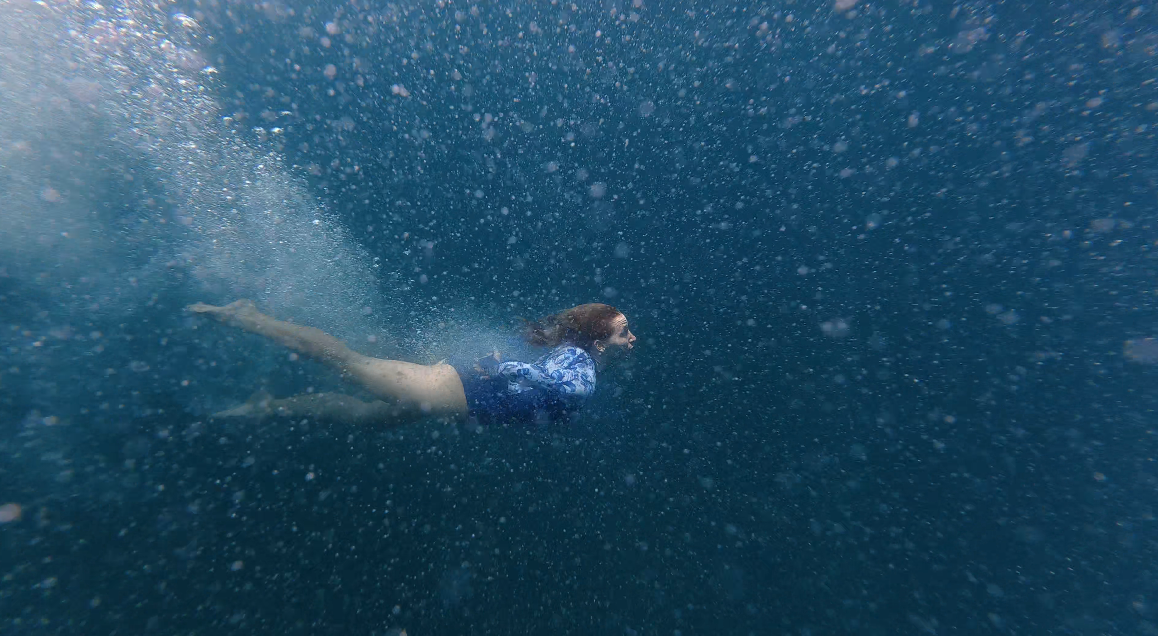
We had just begun moving toward the deeper blue when something quite eerie and unsettling started to unfold before my eyes. A white object was swaying in the depths. The water was very clear, and the strong sun rays penetrating easily as the sun was gradually rising, disturbed the visibility. At first, I thought it was a white plastic bag sinking, as I had seen litter in these waters before, especially around tourist-frequented areas. But then I quickly realised that a plastic bag is too light to sink so rapidly, unless tides and currents were stagnant. I began to approach quickly, signalling my group to pause as I freedived to assess the situation. I felt something wasn't right. We were above approximately ten meters of deep sea. As I freedived, I realized that what I initially assumed to be a sinking plastic bag was actually a small eagle ray, twisting and turning as it sank majestically to the seafloor. Due to this, together with the blurred view from the sun rays, the dorsal dark part was indistinguishable from the deep blue water colours. I tried to get a closer look butI realised I was running out of air. While ascending above the sinking ray, I noticed other small rays sinking deeper in the sea. Reaching the surface and looking up, I saw a boat’s wake as it sailed away. The pescaturismo was departing.
By this time, my focus had been completely overtaken by this situation. Once I emerged from the water, concerned and prompted by what I continued to observe, I extended the snorkelling excursion in that area for a while. I noticed two additional eagle rays on the seafloor. One laid upside down, seemingly lifeless, while the other seemed to be resting on the sand. It soon became clear to me that the second one was dead. A few fish were cautiously inspecting it without any reaction from the ray (a startle would be expected due to its well-developed sensors). With no response, the fish soon began to take bites of it.
The odour from the dead ray (yes, fish sense smell underwater!) or visual cues might have attracted them (and other marine organisms consequently), which are often opportunistic predators or scavengers. As I swam away from this unfortunate scene, the feeding frenzy grew as more fish joined in, with pieces of the eagle ray starting to decompose in the water column.
It's truly remarkable how much detail the mind can capture in a fleeting moment! As five lifeless common eagle rays (potentially Myliobatis aquila) sank to or laid on the seafloor, merging into the cycle of marine detritus, I found myself overwhelmed by a tumult of emotions—an intense swirl of anger, pain, and confusion that felt utterly baffling and impossible to silence.
Then it struck me. The pescaturismo sailing away. The rays still sinking through the seawater. The drag marks. The fishing nets. This was all bycatch. Bycatch is a term used for fish or other marine animals that are unintentionally caught while fishing for a targeted species. Bycatch is also considered when animals get accidentally entangled in the fishing equipment. The consequence of this situation was discarding the undesired rays, injured or already killed in the process, back into the water and left to their faith.
Realising all this was profoundly infuriating. The scale of bycatch occurring globally is staggering, soaring to an alarming 9.1 million tonnes (that's a shocking 10% of annual catches from 2010-2014!) that are recklessly discarded, resulting in the suffering of all kinds of marine animals including endangered, threatened, and protected species. In large-scale fisheries, even marine mammals, turtles and birds fall victim to this unintended capture, highlighting the urgent need for reform and responsible fishing practices globally.
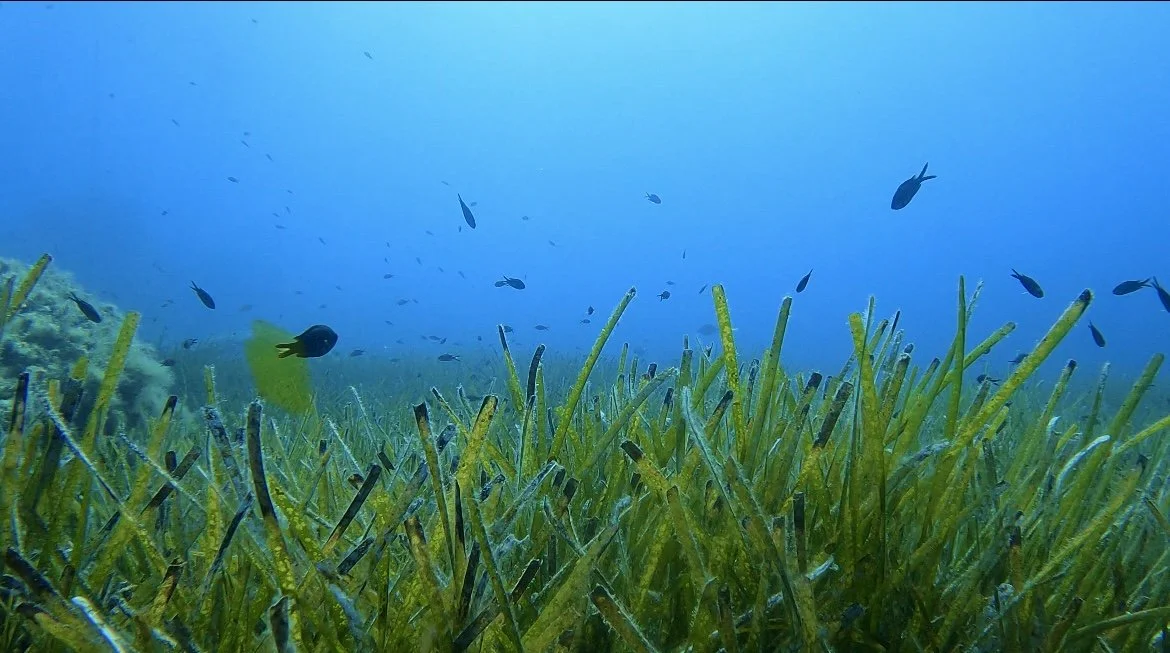
This unwanted catch occurs due to inadequate fisheries management, inappropriate fishing methods, and failure to adhere to established regulations. On this particular occasion, the fishermen might have pulled the net too close to the seabed, an action that could be illegal or unauthorised within the Marine Protected Area (MPA). Since rays predominantly inhabit areas near the seafloor for feeding, resting, or hiding in the sand to evade predators, they were likely caught accidentally during this process. This practice is unlikely to be permitted, as one of the protected habitats within MPA is Praterie di Posidonia oceanica (beds of Posidonia oceanica) and any form of physical disturbance is forbidden.
As anticipated, upon returning to the boat, the first thing I brought up with the capitano was this unfortunate encounter and we agreed to report it to the MPA office right away.
On a similar note, sadly, the Black Sea is also a victim of bycatch. Harbour porpoises are the most affected, followed by common and bottlenose dolphins, which are often ensnared in fishing nets aimed at turbot fishing. Nonetheless, local marine Non-Governmental Organisations (NGOs), along with initiatives from the European Union and the Food and Agriculture Organization of the United Nations (FAO), are striving to address this problem.
Even though we may feel sad and helpless in these situations, it's crucial to acknowledge that scientifically proven methods exist to prevent such errors. Extensive research is underway worldwide to tackle the problem of bycatch. The FAO plays a key role in this field, offering detailed guidelines on bycatch management and strategies to minimise discards. Raising ocean awareness and fostering ocean literacy are equally important, particularly within the fishing industry.
Bianca Mata
Bianca Mata is a marine biologist from Romania. After studying marine biology and working in the UK, Bianca continued her career back home in Romania where she is currently working as a research assistant in macroalgal cultivations at the National Institute for Marine Research and Development "Grigore Antipa". Bianca is a generalist in the field, still discovering her specialisation. However, she has extensive experience in environmental consultancy, and she is also an SSI Master Diver. Besides her current research focus, she has a keen interest in science communication and a passion for making ocean knowledge accessible to the Romanian public.